

Are adult diapers environmentally friendly? Analysis of biodegradable and reusable options.

Adult diapers offer immense convenience when caring for incontinent individuals. They provide a sense of security and comfort in both daily life and travel. However, one question often weighs heavily on people’s minds: are these diapers truly environmentally friendly?
Many people who have used disposable diapers find that discarded diapers are almost everywhere—the plastic and superabsorbent polymers can remain in landfills for decades or even centuries. Every time we discard them, it seems to remind us of the environmental burden hidden behind this convenience. Therefore, biodegradable and reusable adult diapers have emerged and become a focus of increasing attention.
Table of Contents
The environmental dilemma of traditional disposable adult diapers
Most traditional disposable adult diapers contain plastic film, superabsorbent polymer (SAP), and synthetic fibers, all of which are materials that are difficult to degrade under natural conditions.
The long-standing problem of landfill
Every year, billions of single-use adult diapers are discarded globally. For households or care facilities, this translates to massive amounts of waste piling up in landfills, awaiting a long and slow process of natural degradation.
- In landfills, the plastic portion almost never decomposes.
- While superabsorbent polymers have strong water absorption capabilities, they also put pressure on the environment.
Many users have shared their experiences: elderly family members have been using disposable diapers for a long time, and when cleaning up the trash, they always feel that “these things will never disappear.” This psychological burden is also part of the environmental protection discussion.
Resource consumption and carbon footprint
The production of traditional diapers requires a large amount of raw materials and energy:
- Wood pulp, plastics, and polymers require mining and processing.
- Carbon emissions from manufacturing, transportation, and packaging processes should not be ignored.
In other words, every convenient adult diaper may come with the risk of increased energy consumption and environmental stress.
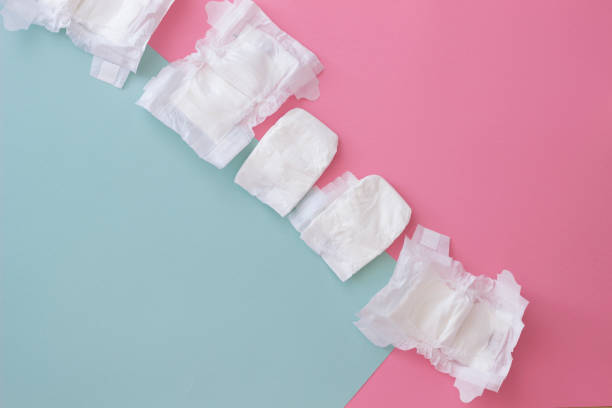
Biodegradable adult diapers: A new environmentally friendly choice
To alleviate environmental pressures, biodegradable adult diapers have been introduced to the market . These products innovate in materials and design, aiming to combine convenience with environmental friendliness.
Material characteristics of biodegradable diapers
- Plant fibers: renewable resources such as bamboo fiber and corn fiber
- Biodegradable plastics: can be broken down by microorganisms under specific conditions.
- Natural pulp: chlorine-free bleaching, more environmentally friendly
These materials can typically decompose in months to years under industrial composting conditions, much faster than traditional diapers which take hundreds of years.
Environmental advantages
- Reduce landfill pressure: Decompose under industrial composting conditions
- Reduce carbon emissions: Plant fiber production requires low energy.
- Safer skin contact: Reduced chemical additives, comfortable and sensitive skin friendly.
Usage Reminder
- While biodegradable diapers are environmentally friendly, they are not a panacea:
- It may still take a long time to decompose in a typical household waste environment.
- Absorbency and leak-proof performance may be slightly lower than traditional cloth diapers, so it’s necessary to choose high-quality products.
Tip: Choose products that are labeled as biodegradable for industrial composting and are certified for more reliable results.
Reusable adult diapers: environmentally friendly and economical
Besides biodegradable diapers, another eco-friendly option is reusable adult diapers . They typically consist of cloth and a washable absorbent layer, allowing for multiple washes and reducing waste.
Advantages Analysis
- Minimal waste: The same diaper can be reused dozens of times.
- Low long-term cost: one-time investment, multiple uses
- Reduce plastic dependence: Fabrics and natural fibers are more biodegradable
A user shared their experience: “After my elderly family members started using reusable diapers, I felt that the environmental burden was much lighter, and they are soft and comfortable after washing.”
Practical Usage Precautions
- Cleaning requires water and energy.
- It’s inconvenient to carry when traveling or going out, so it needs to be planned in advance.
- You may need to prepare spare cloth diapers and quick-drying methods.
The environmental benefits of reusable diapers depend on the washing method, frequency of use, and care conditions. Therefore, they are suitable for long-term use at home, while biodegradable diapers can be used in conjunction with them when going out.
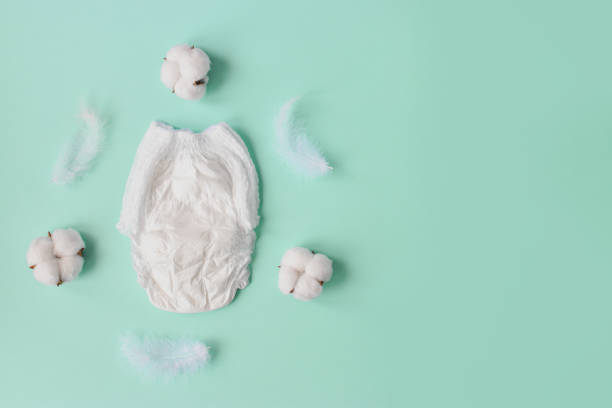
Comparison of disposable, biodegradable and reusable diapers
|
type |
Waste quantity |
Degradation rate |
Ease of use |
Environmental protection |
|---|---|---|---|---|
|
Traditional disposable |
high |
Extremely slow (hundreds of years) |
convenient |
★★☆☆☆ |
|
biodegradable |
middle |
Relatively fast (requires industrial composting) |
It is more convenient |
★★★★☆ |
|
Reusable |
Low |
No degradation required |
Cleaning is troublesome |
★★★☆☆ |
As the table above shows, environmentally friendly options are not limited to a single approach. Depending on individual lifestyle habits, a hybrid strategy is often the most practical method.
- Reusable diapers are the main type used in the home.
- Use biodegradable adult diapers when out and about or traveling.
This strategy balances convenience and environmental friendliness, making life more comfortable and reducing the environmental burden.
Practical Purchase and Usage Recommendations
Verification materials and certification
- Choose products labeled as biodegradable or made from plant fibers.
- Check for industrial composting certification.
Assess use cases
- Reusable diapers are a good option for home use.
- Highly absorbent and biodegradable diapers suitable for travel
Proper disposal of used diapers
- Dispose of according to environmental classification
- Avoid indiscriminate burning or disposal
Hybrid use strategy
Able to be used both at home and on the go, achieving a balance between convenience and environmental protection.
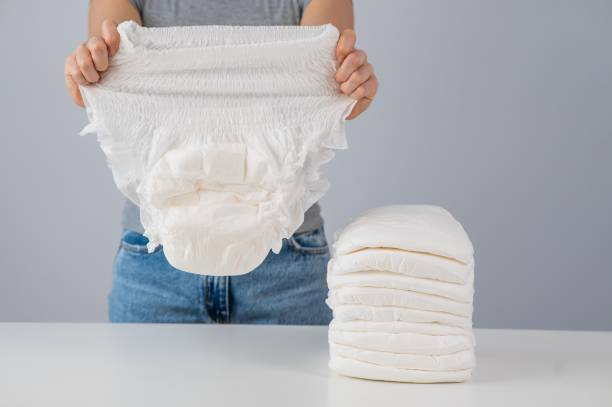
FAQ: Environmental Issues of Adult Diapers
Q1: Will adult diapers persist in the environment for a long time?
Yes, traditional disposable diapers contain plastics and polymers, which may take decades or even centuries to degrade.
Q2: Can biodegradable diapers decompose naturally at home?
Most require industrial composting conditions, and decomposition in a household waste environment still takes a long time.
Q3: Are reusable diapers really environmentally friendly?
Yes, but washing them consumes water and electricity, so the environmental benefits depend on the washing method and frequency.
Q4: Is the absorbency of biodegradable diapers sufficient?
High-quality biodegradable diapers have absorbency close to that of traditional diapers, while some lower-end products may be slightly inferior.
Q5: Are there any completely environmentally friendly adult diapers?
There are currently no 100% environmentally friendly diapers on the market, but biodegradable and reusable solutions significantly reduce the environmental burden.
Conclusion: Finding a balance between convenience and environmental protection
The answer to “Are adult diapers environmentally friendly?#8221; cannot be generalized. Traditional diapers have a heavy environmental burden, but biodegradable materials and reusable options are making the choices more diverse.
When choosing eco-friendly diapers, consider the materials, usage scenarios, and your personal lifestyle to balance convenience and environmental responsibility. Gradually adjust your approach, and you’ll find that comfort and responsibility towards the planet are not mutually exclusive.
In the future, with technological advancements, we look forward to the emergence of more highly absorbent, comfortable, and environmentally friendly adult diapers , allowing convenience and environmental protection to truly go hand in hand.
Related Posts

How to Use Adult Diaper Sample Packs before Buying a Case: A Real-Life Checklist
How to Use Adult Diaper Sample Packs before Buying a Case: compare the key signals, common mistakes, and one-variable tests before changing size, product form.
How to Talk to Parents About Adult Diapers: Before You Change Products
How to Talk to Parents About Adult Diapers: compare the key signals, common mistakes, and one-variable tests before changing size, product form, or routine.
How to Measure Waist for Adult Diapers: A Practical Guide
How to Measure Waist for Adult Diapers: compare the key signals, common mistakes, and one-variable tests before changing size, product form, or routine.
Incontinence Travel Emergency Kit: What to Check First
Incontinence Travel Emergency Kit: compare the key signals, common mistakes, and one-variable tests before changing size, product form, or routine.
Adult Diapers for Road Trips: What the Leak Pattern Can Tell You
Adult Diapers for Road Trips: compare the key signals, common mistakes, and one-variable tests before changing size, product form, or routine.
How to Dispose of Adult Diapers Discreetly: Fit, Routine and Next Steps
How to Dispose of Adult Diapers Discreetly: compare the key signals, common mistakes, and one-variable tests before changing size, product form, or routine.
Discreet Storage for Incontinence Supplies: A Real-Life Checklist
Discreet Storage for Incontinence Supplies: compare the key signals, common mistakes, and one-variable tests before changing size, product form, or routine.
Adult Diaper Privacy Conversations: Before You Change Products
Adult Diaper Privacy Conversations: compare the key signals, common mistakes, and one-variable tests before changing size, product form, or routine.
Adult Diapers for Independent Dressing: A Practical Guide
Adult Diapers for Independent Dressing: compare the key signals, common mistakes, and one-variable tests before changing size, product form, or routine.
How to Discuss Incontinence Privately: What to Check First
How to Discuss Incontinence Privately: compare the key signals, common mistakes, and one-variable tests before changing size, product form, or routine.
Adult Diaper Flow Rate for Continuous Leakage: What the Leak Pattern Can Tell You
Adult Diaper Flow Rate for Continuous Leakage: compare the key signals, common mistakes, and one-variable tests before changing size, product form, or routine.
Adult Diaper Travel Packing List: Fit, Routine and Next Steps
Adult Diaper Travel Packing List: compare the key signals, common mistakes, and one-variable tests before changing size, product form, or routine.