

Adult Diapers for Seniors and Older Adults
Choosing adult diapers for elderly family members becomes clearer when you start with mobility, dressing ability, urine or bowel leakage, nighttime habits and who will perform the change.
Age alone does not determine product form or absorbency. This guide helps families compare pull-ons, tabbed briefs, pads, boosters and bed protection without taking control away from the person who will wear them.
A useful product has to fit the next ordinary action
A spare pack on the highest closet shelf is technically available, but it may not be reachable when someone is tired, unsteady or changing another person alone. The same is true of the product itself: protection is only practical when it can be put on, adjusted and removed in the real setting.
One older adult may walk to the bathroom and prefer protective underwear that pulls on like an ordinary garment. Another may need a product that opens flat for a bed change. A third may need light pads during the day and fuller coverage at night.
Start with ability and routine. Then check fit, leakage pattern, skin and cost. This order makes it easier to compare adult diapers for seniors without treating every older adult as if they have the same needs.
“Help should make the next step easier without taking over the whole routine.”
Answer six questions before comparing absorbency
These questions separate the product form from the marketing label. They also reveal when the wearer, a family member or a professional caregiver needs a different change routine.
Can the person stand and pull clothing up?
Independent standing often makes a pull-on practical. Limited standing, unsafe balance, wheelchair use or bed-based care may make tabs easier.
Who puts the product on?
A self-dressing routine and a caregiver-led bed change require different openings, hand positions and access to clothing.
Is the need light, heavy, urinary or bowel related?
Pads, guards, pull-ons and full briefs provide different coverage. Bowel care usually needs broader containment and easier opening.
Is most time spent walking, sitting or lying down?
Sitting pressure, side sleeping and back sleeping change where liquid travels and where the product must remain in contact.
Can the person report dampness or discomfort?
When self-report is limited, caregivers need a consistent way to observe fit marks, dampness, behavior changes and skin condition.
What happens when the routine fails?
Include laundry, underpads, replacement clothing, unused cases, travel backups and caregiver time—not only price per piece.
Choose by the way the product will be changed
Neither form is automatically more respectful or more protective. The better choice is the one that fits the wearer’s abilities and allows a calm, safe change.
Pull-on protective underwear
Compare pull-ons first when the wearer can stand, step into the product and pull clothing up. Tear-away sides can make removal easier, but a fresh pull-on still has to pass over the feet and legs.
Adult diapers with tabs
Compare tabbed briefs first for bed changes, bowel care, limited standing or body shapes that need separate adjustment at the waist and thighs.
Pads and guards
Pads may suit light bladder leakage when fitted underwear holds them securely. They are not simply a thinner substitute for full coverage.
Bed and chair protection
Disposable or reusable underpads provide secondary surface protection. They do not correct the fit of a wearable product.
Match the product form to the way the day actually works
Use this as a starting point, then measure the body and test the product during the normal movement, sitting or sleep position.
| Daily ability or care setting | Product form to compare first | Why it may help | What to check |
|---|---|---|---|
| Walks, stands and dresses independently | Pull-on protective underwear | Familiar dressing motion and less caregiver involvement. | Waist recovery, thigh contact, tear-away sides and movement after absorption. |
| Can stand briefly with assistance | Pull-on or refastenable tab brief | The choice can follow the safer and less tiring application method. | Whether the routine still works on a weaker or more painful day. |
| Wheelchair or prolonged sitting | Stable tab brief or pull-on selected after a seated fit check | Allows closer attention to rear-waist height, crotch position and sitting pressure. | Rear drop, rotation, thigh friction and dampness after prolonged sitting. |
| Bed-based changes | Open-flat tabbed brief with separate surface protection | Can be positioned without pulling the product over the feet. | Side-panel reach, rear coverage, caregiver access and safe turning. |
| Light bladder leakage | Pad or guard held by fitted underwear | Less coverage may be sufficient when the product stays in the correct position. | Pad length, anatomy, underwear fit, movement and whether leakage exceeds the pad. |
| Bowel or mixed urinary and bowel leakage | Full-coverage brief selected for the change routine | Provides broader containment and easier access for cleaning. | Standing guards, rear coverage, timely changes and skin observation. |
A larger size can create a larger leak path
The same size letter can fit differently across products. Measure waist and hips, then check the thighs, rise and movement.
A product can close at the waist and still leave space at the legs. It can also look stable while dry and drop after the absorbent core becomes heavier.
If wetness escapes while part of the core remains dry, do not assume the answer is a larger size or a thicker product. Check where the leak began, whether the standing guards were upright and whether the product shifted while sitting or sleeping.
For repeated leg, back or side leaks, continue with the adult diaper leak prevention guide.
A flow-through booster such as the FlowBridge Booster Pad should be considered only when the host brief already fits and reaches capacity. It is not a substitute for correcting leg gaps, low rise or product movement.
“Overnight” describes a product direction—not a fixed change schedule
Nighttime selection should consider the normal sleep position, where leaks appear, whether the product becomes fully saturated, bowel episodes, skin observations and whether a safe change can be performed.
A higher-absorbency product may reduce changes caused by saturation. It does not mean that every person should remain in the same product for a fixed number of hours. Change after bowel soiling and when the product is leaking, saturated, uncomfortable or associated with persistent dampness or skin concerns.
Side sleepers may need different core coverage from back sleepers. Surface protection can reduce the consequences of an accident while the wearable product is being tested.
Continue with the side-sleeper guide or the sensitive-skin guide for the next specific question.
When a correctly fitted brief becomes fully saturated, compare the FlowGuard Maximum Absorbency Tab Brief . When leaks happen mainly during side sleeping, compare the SideGuard Extended Core Tab Brief after checking size and sleep position.
The conversation can be as important as the package
Resistance is not always resistance to protection. It may be a response to the name, timing, fit, heat, clothing change or loss of privacy.
Use the wearer’s preferred words
“Protective underwear,” “briefs” or another familiar term may feel more appropriate. Use adult language and avoid turning the product into a judgment about the person.
Offer two workable choices
Choice may be pull-on or tabs, daytime or nighttime trial, or which family member helps. A short choice is often easier than presenting a shelf of unfamiliar packages.
Explain an ordinary benefit
Focus on staying through a meal, sleeping with fewer interruptions, attending an appointment or avoiding an emergency clothing change.
Begin with a small trial
A small pack allows the wearer to participate and reduces the cost of committing to an unsuitable size or product form.
Treat changes in behavior as a reason to check—not as a diagnosis
A nonverbal or cognitively impaired older adult may pull at the waistband, touch one thigh, avoid sitting, become restless or remove the product without being able to explain why.
Check whether the product is wet, twisted, too tight, too loose, newly substituted or difficult to recognize. Look for product sag, pressure marks, damp clothing, a new odor and skin changes. Compare these observations with the person’s usual behavior.
A pull-on may look more like ordinary underwear. A tabbed brief may be easier to apply in bed. Neither answer is automatic; the useful choice depends on the individual response and the change routine.
The article on helping a parent accept protective underwear continues the communication side of this question.
Protective underwear does not have to replace toileting
When an older adult can still use the toilet independently or with assistance, the product can serve as backup while the routine continues to support that ability.
Notice the normal pattern
Record common times, urgency, nighttime episodes and when transfers become slower.
Keep the route practical
Clothing, lighting, mobility aids and bathroom distance can decide whether a planned visit remains realistic.
Use protection as backup
A product can reduce the consequences of a delay without becoming a reason to stop offering the toilet.
Review meaningful changes
A sudden change in urgency, leakage, behavior or ability deserves attention beyond a product upgrade.
Compare the cost of the complete routine
Price per piece is useful only when the products perform the same job. A cheaper brief that creates more clothing changes, laundry, underpad use and caregiver work may cost more across the week.
Record how many products are used, how many changes fail, whether bed or chair protection is needed, how often clothing is replaced and whether an opened case becomes unusable after a sizing mistake.
Continue with the adult diaper price and total-cost guide for a narrower comparison.
For secondary bed or chair protection, compare the StayDry Disposable Underpad . It protects the surface while the wearable product is being evaluated; it does not correct an unsuitable wearable fit.
Start with the product form that matches the care routine
These four products represent the most common decisions on this page: independent dressing, caregiver-assisted changes, nighttime protection and extended sizing. They are starting points rather than a universal ranking.
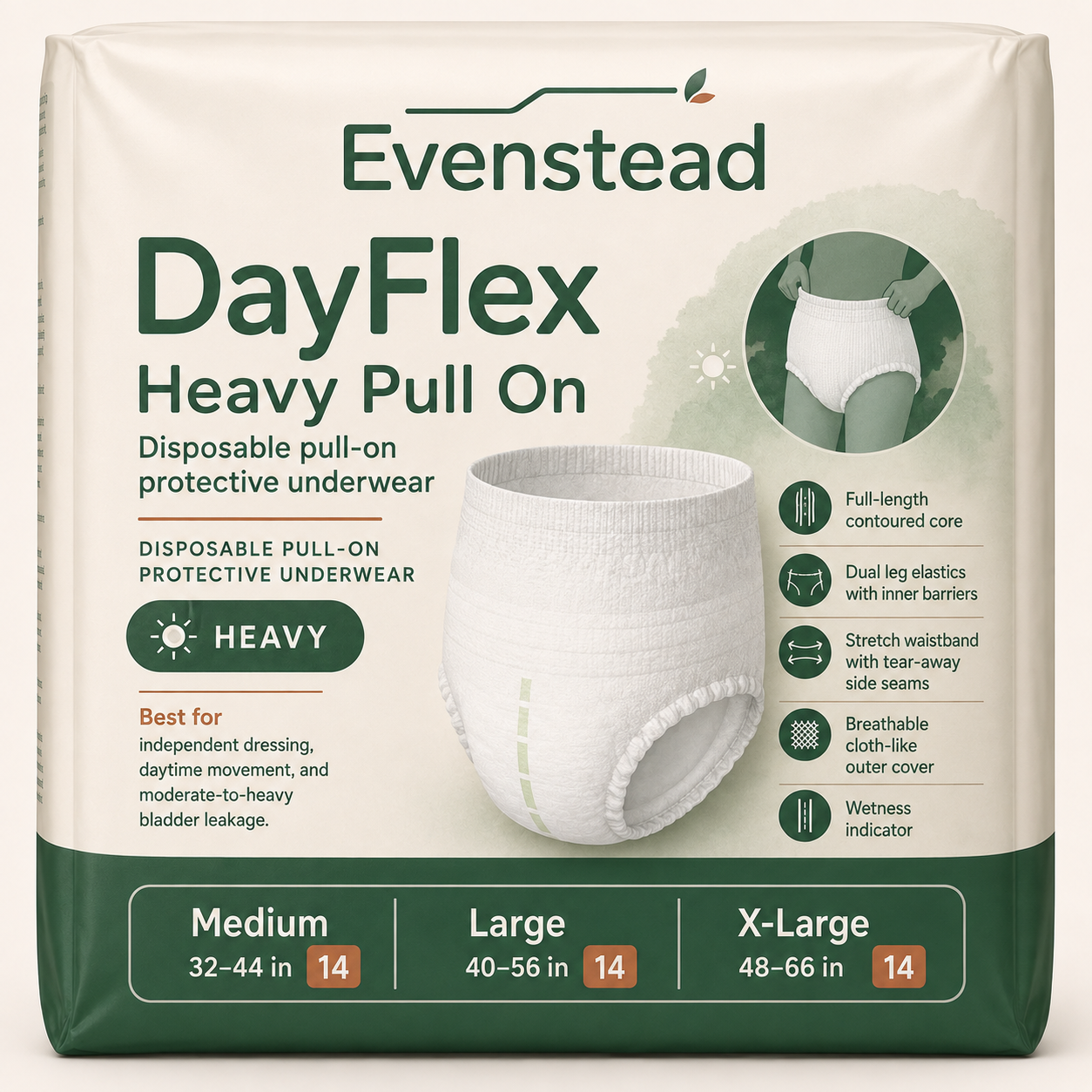
Evenstead DayFlex Heavy Pull On
Best match: Older adults who can stand, dress and pull clothing up with little or no help.
Choose a pull-on for a familiar underwear-like routine. Reconsider tabs if balance, pain or weakness makes stepping into the product difficult.
View product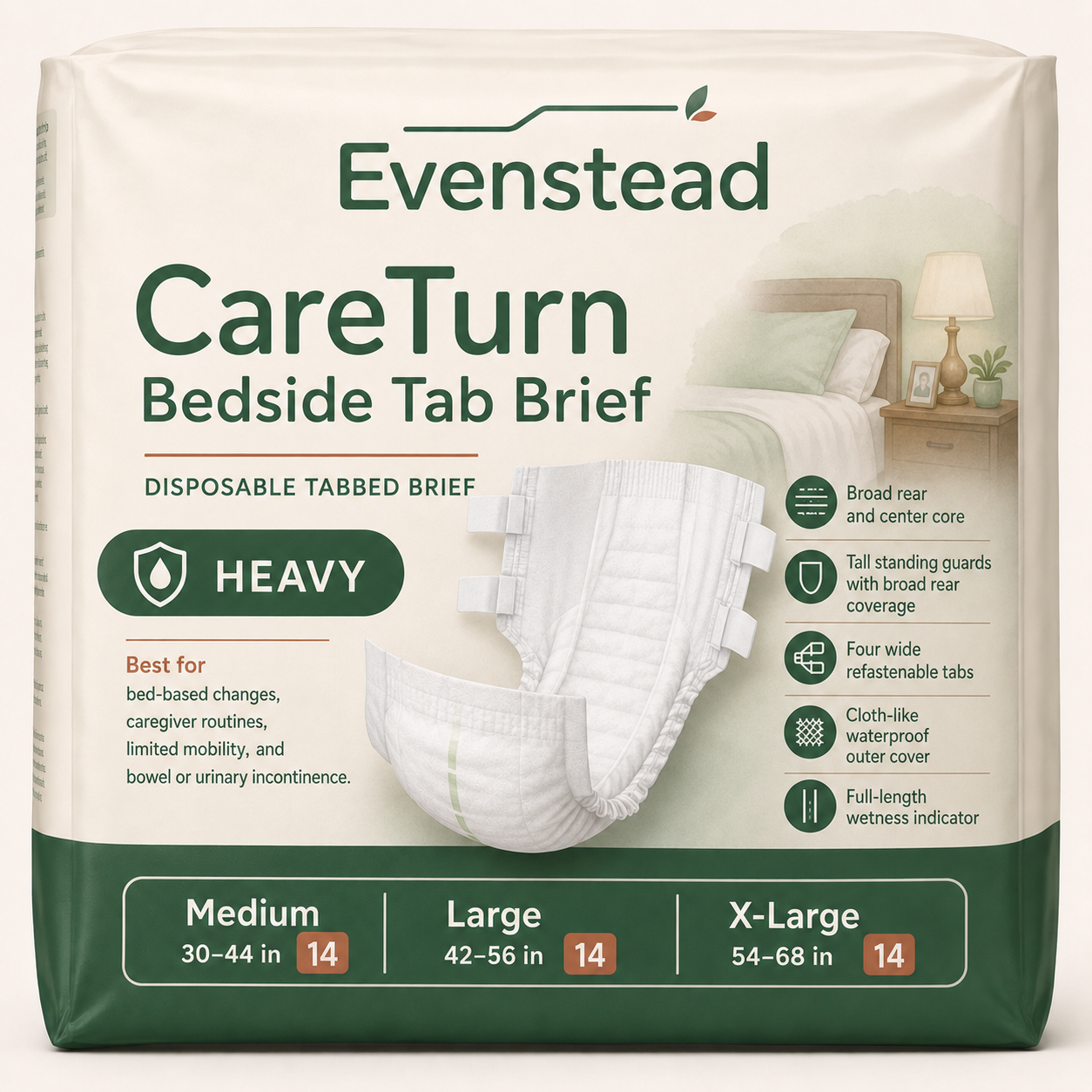
Evenstead CareTurn Bedside Tab Brief
Best match: Bed-based changes, limited mobility and caregiver-led urinary or bowel care.
The open-flat design supports access and adjustment. It does not replace timely changes, safe turning or regular skin observation.
View product
Evenstead NightShield Overnight Tab Brief
Best match: Long nighttime routines that need adjustable fit and greater rear-waist coverage.
Check the normal sleep position, rear rise and actual saturation before assuming that a thicker product is the only answer.
View product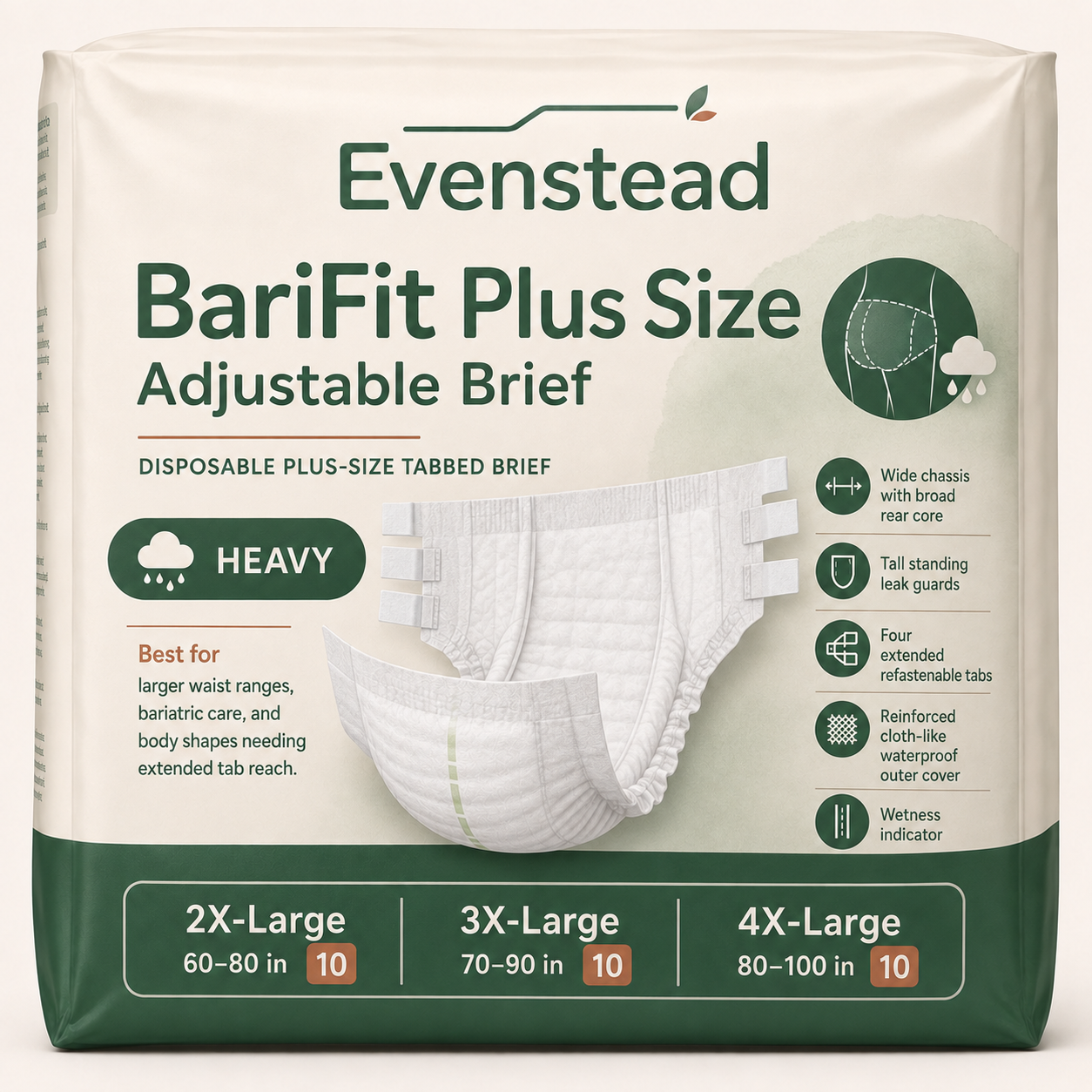
Evenstead BariFit Plus Size Adjustable Brief
Best match: Larger waist ranges and body shapes that need longer tabs and more independent adjustment.
A wider waist range does not automatically close thigh gaps. Compare rise and leg contact before ordering a full case.
View productContinue with the guide that matches the situation
Size, recurring leaks, bed-based care, skin and changing technique each need a more focused explanation. These guides continue the decision without starting over.
Measure waist, hips and thighs; check rise, leg gaps and movement.
Read the size guideTroubleshoot leaks at the legs, back and sides before changing products.
Read the leak guideCompare bed changes, wheelchair sitting, rear coverage and caregiver access.
Read the care guidePrepare the area and compare standing, seated and bed-based changes.
Read the changing guideSeparate moisture, friction, pressure and material concerns.
Read the skin guideReview side gaps, core width, sleep position and surface protection.
Read the sleep guideBrowse by product form
Adjustable protection for assisted, bed-based and bowel-care routines.
Browse tabbed briefsUnderwear-like dressing for adults who can stand and pull clothing up.
Browse pull-onsCompare rear coverage, sleep position and wet-state stability.
Browse overnight productsBroader containment selected around cleaning and change access.
Browse bowel-care productsExtended waist ranges with attention to rise and thigh contact.
Browse plus-size productsSecondary surface protection for beds, chairs and product trials.
Browse underpadsA new change in continence deserves more than a new package
Absorbent products help manage leakage; they do not determine why it began. Seek professional guidance for new or rapidly worsening incontinence, pain, blood in the urine, fever, difficulty urinating, new neurological symptoms or serious or persistent skin damage.
Do not reduce fluid intake without clinical guidance simply to reduce product use. A sudden change in behavior, mobility or bladder or bowel function should also be discussed with an appropriate health professional.
Adult diapers for elderly and senior care FAQs
How do I choose adult diapers for an elderly parent?
Are pull-ups or adult diapers with tabs easier for seniors?
What are the best adult diapers for elderly people at night?
What are the best incontinence pads for an elderly woman?
Are adult diapers for bedridden elderly adults different?
How often should an older adult's incontinence product be changed?
Should scheduled toileting continue while a senior wears protection?
What if a person with dementia removes or refuses the product?
How can a caregiver tell whether a nonverbal adult is uncomfortable?
Are reusable waterproof bed pads useful for elderly adults?
How should I compare the cost of incontinence supplies for elderly care?
Protect the day without taking over the day
Begin with movement, dressing ability and the way the change happens. Then use the fit, leak, nighttime, caregiver and skin guides to solve the next specific problem.